Slope
Slope Complete High-Velocity Reflex & Endless Descent Guide
What Is Slope & The Mechanics of Infinite Descent
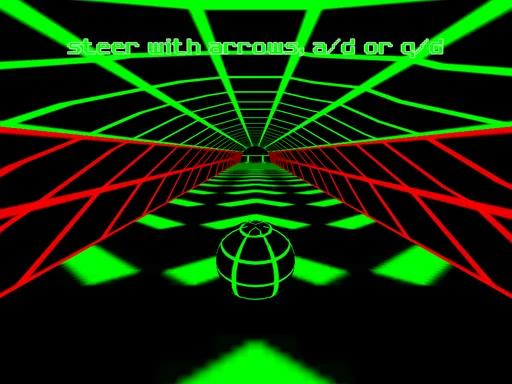
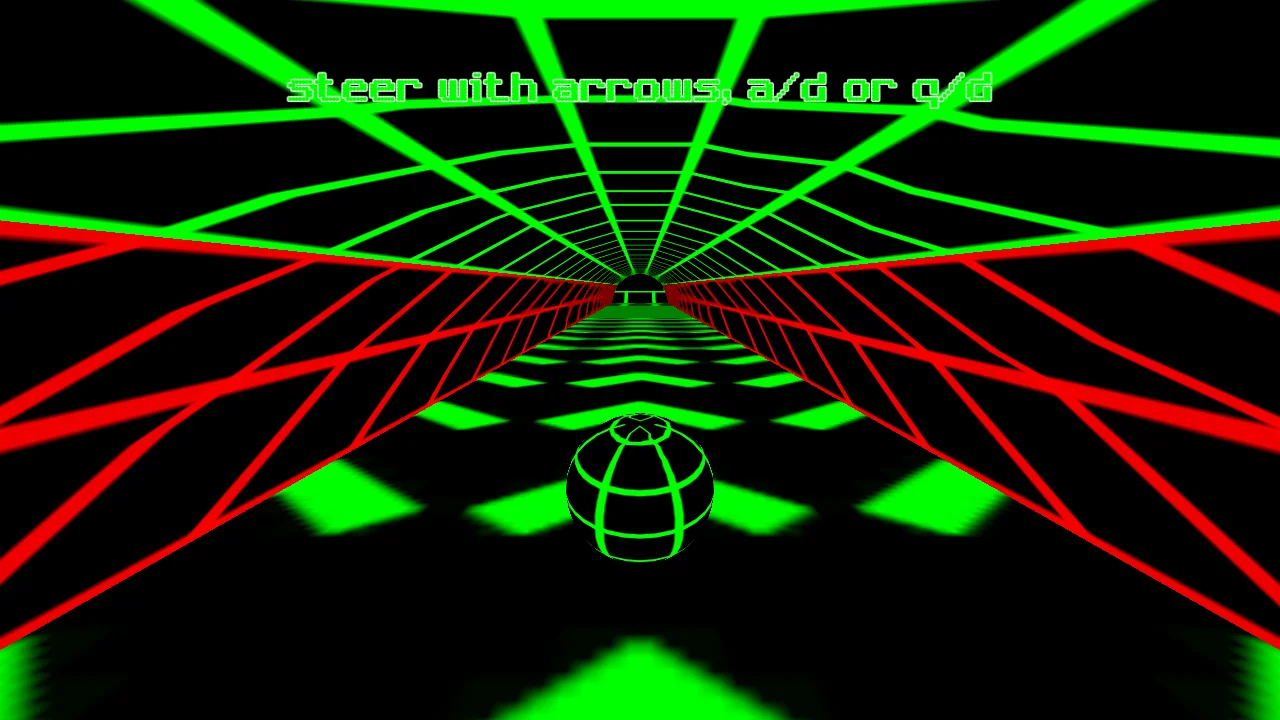
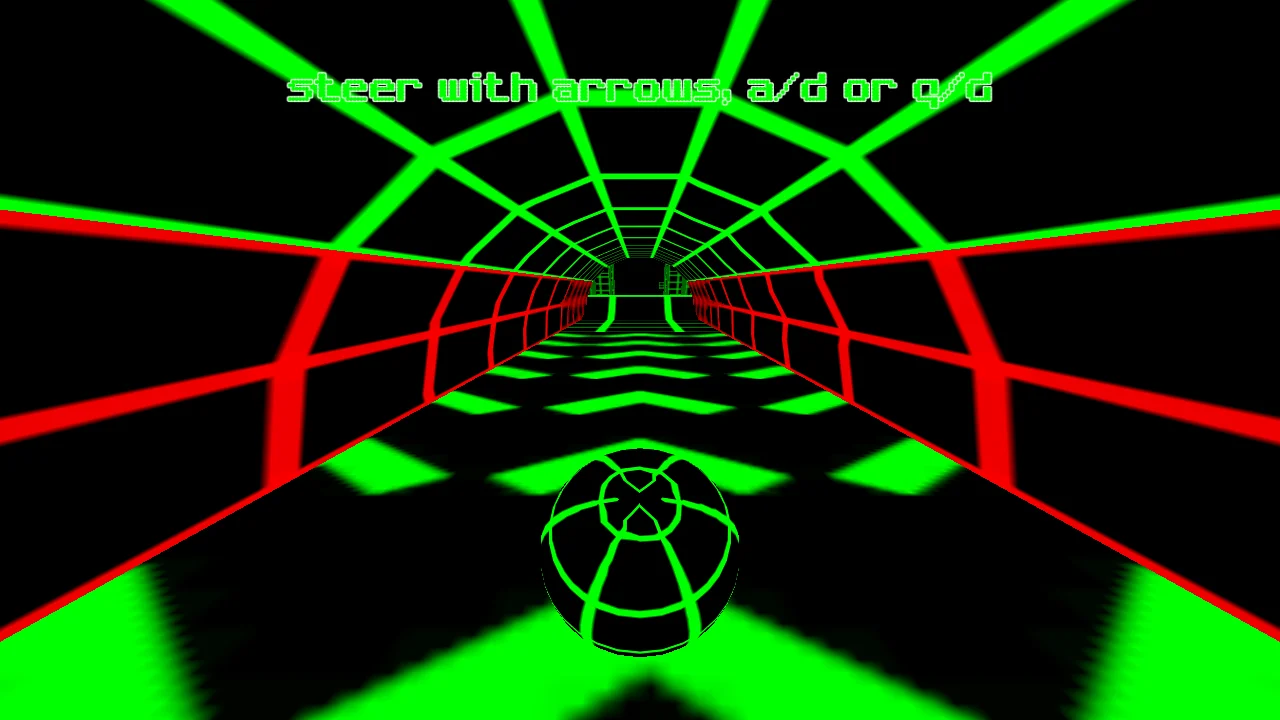
Slope is a legendary 3D endless runner simulation that distills arcade gaming down to its purest, most exhilarating elements: speed, precision, and relentless physics. Players command a luminescent green sphere hurtling down an infinite, procedurally generated neon-green downhill grid set against a deep cosmic void. There are no finish lines, checkpoints, or artificial speed limiters—the longer you survive, the faster the sphere rolls, transforming the challenge into a test of human reaction limits.
The game's physical engine simulates authentic rolling sphere inertia. Unlike 2D platformers where characters stop instantly, your sphere in Slope carries immense momentum. Cutting hard to the left or right requires counter-acting lateral centrifugal force to prevent the ball from sliding off the unbarricaded edges into the bottomless abyss. On [Dirtbound](/), mastering Slope demands micro-adjustment discipline: over-steering by a fraction of a millimeter will send you hurtling off the narrow polygonal platforms.
Combined with a pulsating electronic soundtrack, dynamic lighting, and unpredictable obstacle layouts, Slope provides an addictive, flow-state experience that challenges even seasoned reflex gamers.
Step-by-Step Gameplay Loop & Speed Progression
Every run in Slope begins with a calm, introductory descent that quickly accelerates into a white-knuckle speed sprint. Understanding the pacing of a run is vital to achieving scores beyond 50 points:
1. The Initial Calibration Zone (0 to 10 Points): The slope begins with wide, gentle downhill ramps. Use this brief window to calibrate your keyboard steering latency and adjust your seated posture.
2. The First Obstacle Introductions (10 to 25 Points): Lethal red rectangular blocks and triangular wedges begin appearing across the center of platforms. Memorize their static positions and practice weaving smoothly through their lanes.
3. Narrow Ledges & Gap Transitions (25 to 50 Points): Platforms become significantly narrower, often reducing to a single lane barely wider than the sphere. Gaps in the track require high-speed leaps across open space where steering must remain perfectly centered.
4. Hyperspeed Flow State (50+ Points): Velocity reaches terminal limits. Tunnel vision becomes your greatest enemy; you must rely entirely on peripheral vision and proactive pattern recognition to survive.
Your score increments by one point for every continuous segment traversed. Colliding with a red hazard or falling off the side of a platform instantly halts the run and logs your final score on the global leaderboard.
Complete Controls Guide: Keyboard & Mouse Steering
Controlling a sphere traveling at breakneck speeds requires rapid, subtle directional taps rather than heavy key presses:
- A Key or Left Arrow: Steer Left. Generates smooth lateral rolling torque toward the left edge of the track.
- D Key or Right Arrow: Steer Right. Generates lateral rolling torque toward the right edge of the track.
- Q / D Alternative: On certain international keyboard layouts (AZERTY), Q and D serve as the default lateral steering inputs.
- Mobile Touch / Tilt Controls: On compatible touchscreen and mobile browsers, dragging your finger left and right across the lower screen quadrant commands the sphere's lateral trajectory.
The golden rule of steering in Slope is rhythmic feathering. Because momentum compounds as speed increases, holding the left or right key for more than half a second causes severe over-steer. Train your fingers to execute crisp, staccato taps that nudge the ball back toward the centerline.
Terrain Topography & Hazardous Obstacle Breakdown
The procedural tracks in Slope are generated using a modular library of challenging geometric formations. Learn to recognize each pattern well before reaching it:
- Static Red Cubes: The most common hazard. These vibrant red blocks occupy specific lane positions on the track. Never attempt to jump over them; always chart a lane change around them.
- Moving Red Hazard Walls: Advanced stages introduce red barriers that slide laterally back and forth across the platform. Time your approach to pass behind the hazard after it completes its sweep.
- Banked Curved Ramps: Deep concave half-pipe sections that curve sharply. Staying along the lower centerline minimizes sliding, while riding the upper rim can help you bypass central ground obstacles.
- Tunnel Slopes & Ceiling Traps: Enclosed sections with low ceilings that prevent airborne bounces. Maintain absolute lateral stillness to prevent bouncing off sidewalls.
- Discontinuous Drop Gaps: Sudden breaks in the platform surface. Ensure your ball carries enough forward velocity to clear the chasm, and never turn the wheels while in mid-air.
Beginner Mistakes & Critical Survival Rules
New players frequently succumb to predictable errors that keep their scores below 20 points. Review these essential tactical guidelines:
First, stop looking directly at your sphere. If your eyes are tracking the ball at the bottom of the screen, you are reacting to obstacles after it is already too late. Train your gaze to remain fixed on the upper third of the display where new slope segments render into view.
Second, avoid unnecessary lane weaving. Weaving back and forth across wide ramps creates unpredictable lateral momentum that becomes fatal when the track suddenly narrows. Pick the straightest possible geometric path through obstacle corridors.
Third, respect mid-air inertia. When your sphere launches off a jump ramp, air resistance is minimal. Touching the steering keys while airborne will cause the ball to drift laterally, causing you to miss the landing platform entirely upon touchdown. Keep your hands off the steering buttons while in flight.
Advanced Tactics for 100+ Point High Scores
Reaching three-digit scores in Slope requires mental endurance and extreme physical precision:
1. The Centerline Anchoring Technique: Whenever traversing an obstacle-free stretch, instinctively guide the ball toward the absolute center seam of the platform. This provides equal margin for error on both sides when unexpected obstacles suddenly spawn.
2. Peripheral Vision Scanning: Soften your visual focus slightly. Allowing your peripheral vision to detect red color flashes enables faster reflex reaction times than conscious deliberate scanning.
3. Sound-Cue Rhythm: Play with the electronic audio turned on. The rhythmic beat helps regulate breathing and prevents panic-induced jerking of the steering keys during chaotic sequences.
Explore additional reflex-testing titles in our [Arcade Games](/arcade-games/) collection, or experience precision vehicular physics in [Racing Games](/racing-games/) on Dirtbound.
Technical Performance & Universal Compatibility
Slope is built on lightweight WebGL technology that runs smoothly across all contemporary web environments:
- High-Refresh-Rate Displays: Fully supports 120Hz and 144Hz monitors, delivering ultra-fluid frame delivery crucial for high-speed evasion.
- Zero Latency Canvas: Optimized input listeners minimize keyboard polling delay for immediate steering response.
- Browser Universality: Runs flawlessly on Chrome, Edge, Firefox, Opera, and Safari without software installations.
- No Hardware Barriers: Compatible with modest school Chromebooks, office laptops, and desktop gaming rigs.